
Beta Beer
Our Head Brewer and Sensory Specialist on Test Batches, Sensory, Hop Selection and Collaboration

It’s Beta Season at Fort George. We’ve been working on Beta Test Batches since early fall 2025 and we’re finally approaching the last stage with our collaborators for this year’s 3-Way IPA.
A collaboration starts in the pint glass - before the beer is even brewed, we sit around with our friends and talk about the beer we’re drinking right now.
From hop selection to the final recipe, we’re all hoping to create something worth talking about. We’ve brewed 5 test batches for 2026’s 3-Way IPA over the last year, as well as a number of other test batches for larger releases.
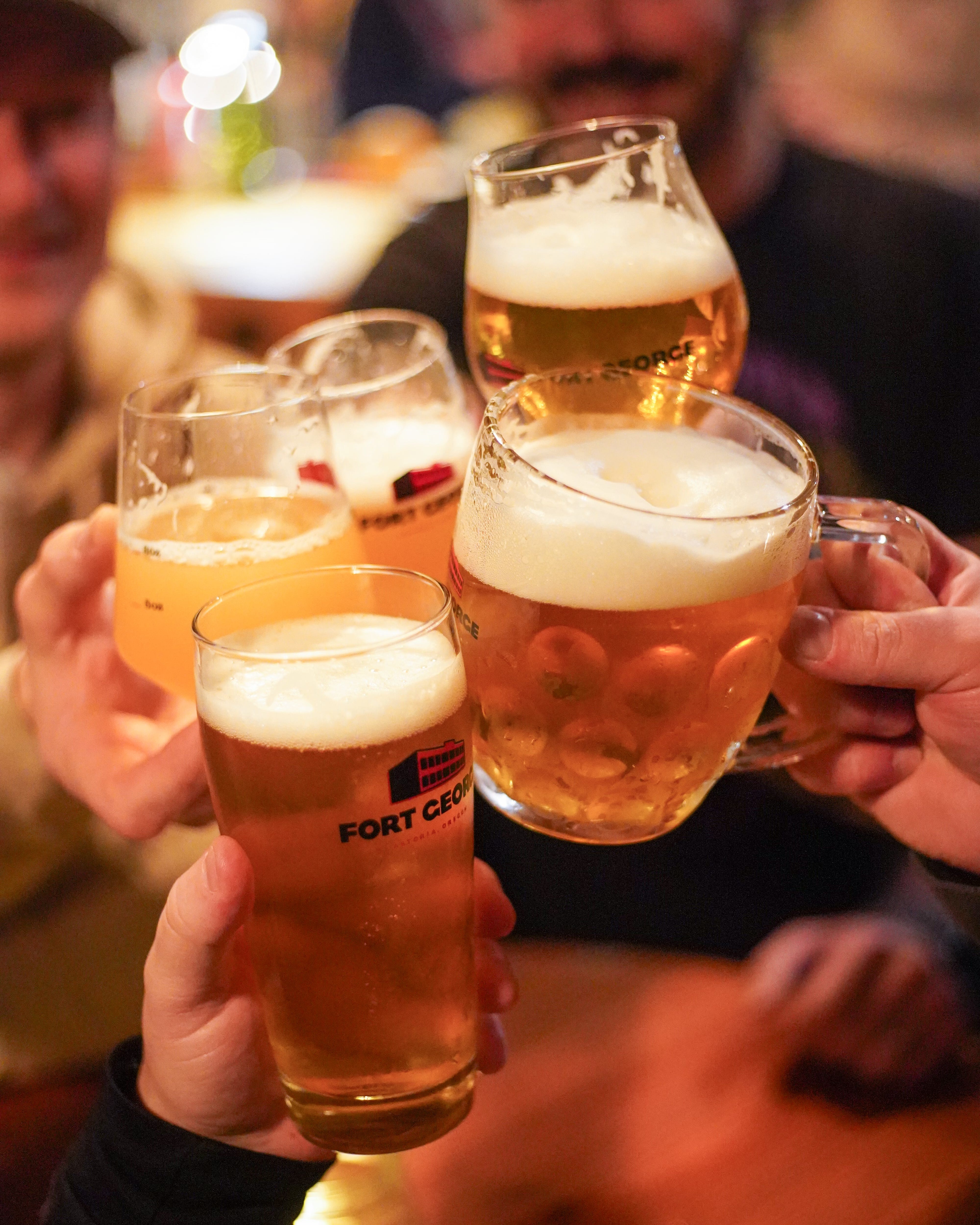
Here’s Michal Frankowicz, our Head Brewer and Chris Kind-Chalmers, Sensory Specialist, on the Beta beer process, our sensory program, and what goes into a collaboration like 3-Way IPA.
MICHAL FRANKOWICZ: The biggest part is - if it’s collaboration - we start the discussion with our partner or partners about what we want to make. It’s almost always an IPA, honestly, though we’re usually open to anything.
We have everything on the table at the start of that conversation. I don’t think we ever start by saying, “it’s got to be a West Coast IPA or a hazy or a West Coast Pilsner.” We’ll discuss what they’ve been enjoying in the last 6 months and then we discuss what we’ve been enjoying. That starts to create the idea of what we’re going to make.
Once we lock in on all the common interests that we have, then we start deciding what we’d like to see from the beer. Usually hops are already being discussed with those common interests and we’ll have maybe 3 or 4 hops that we all want to use. We’ll see if they could stand alone or if they need to be paired up with something else. Once we’ve got a basic idea, I work with Colin, our Supply Chain Manager, to see if we can get all of the ingredients assembled, then we make up a recipe based on that. If we can’t get certain ingredients, then we’ll adjust.
Sometimes we’re making compromises or adjustments to ingredients before we even start building the recipe.
MICHAL: We’re very specifically into certain lots of hops. Say that we want Mosaic. It’s not that we want any mosaic. A lot of different producers grow Mosaic. We want Mosaic, from X, lot number X.
A lot number sometimes references what farm the hop came from, when it was harvested, sometimes it’s as specific as which acre of which farm. But it could be a few different things. Often, it will refer to the same “lot” year over year, but that doesn’t mean much in terms of the product. There’s bale lot, which is where the farm harvested it from on the property, then there’s the pellet lot, which signifies the pelletizer for FDA purposes. So you could have the same lot two years in a row and they could be wildly different. “Lot number” could be as broad as the year or as specific as the acre on the farm in a certain year.
So as we’re tracking down ingredients, there have been times when we all agree that, say this Mosaic lot number X is amazing. We try to locate it. Can we get it? Nope. That’s okay. Is there anything even close to that? Nope. All right. Shall we just pivot from here? Yeah. It’s a new strategy going forward.
CHRIS KIND-CHALMERS: It can begin as early as hop selection, like what Michal said, if we know what our collaboration partner is going to be looking for, or if we’re lucky enough that we already have an idea of the direction that we would want to go with the beer, if we’ve started that conversation early enough, it gives us an opportunity to incorporate our plans into the sensory analysis of the hop cones at harvest when we are smelling them in real time.
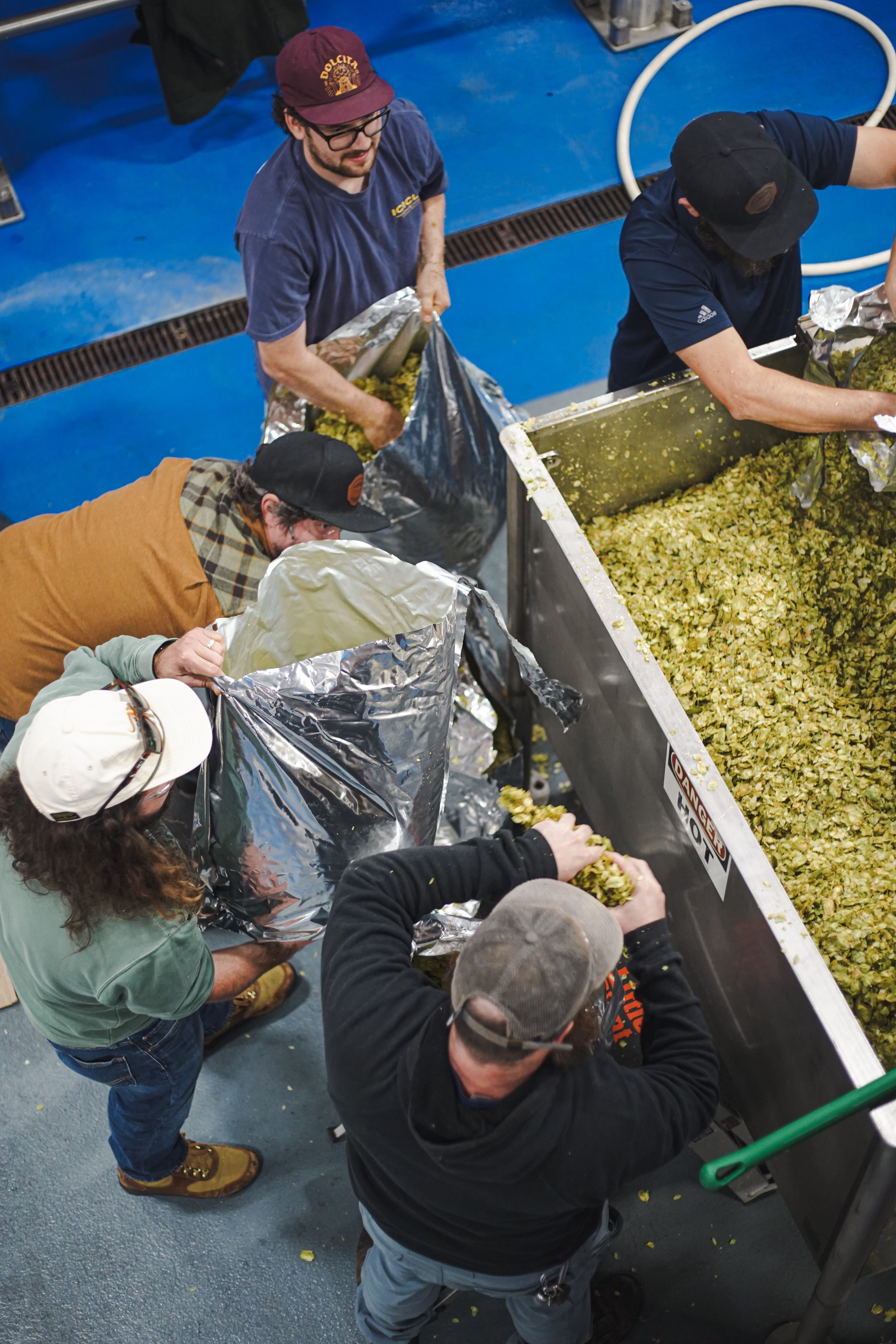
Our Sensory team is hard at work year round on barrel projects, quality control and ingredient selection. Since the production process for an IPA is a little shorter than a barrel aged imperial stout, there’s a little less work to be done but the work of the sensory team is still crucial to the success of the beer.
CHRIS: At hop selection, we’re running through what the producers have to offer, looking for specific key components that match up with the direction that we’re wanting to go in for whatever seasonal collaboration or one-off beers we have planned. If we have four beers and we know the flavor profile that works for them, what we’re looking for from the hop, we’ll steer selection towards what we know we’ll need. Lots change year over year, like you said, so what we had the previous year might not work for us.
Then once the beer concept and profile has been developed, that’s when Sensory can really lend a good assist. If it’s going to be a hoppy beer we’re going to be sensing those hops all throughout the process. They’ll change over the course of processing and pelletizing and what arrives at the brewery might be a lot different from what we smelled and selected as a whole cone. We want to go ahead and check on those - making sure that they’ve retained the key qualities we’re looking for.
After the first dry hop on say an IPA, we’re checking in again to see if the hops are steering the beer in the direction we hoped. This gives us an opportunity to pivot from what we’d planned for the second dry hop if needed. After that, we’ll be continuing to taste and smell and adjust throughout the process. As the beer is being centrifuged, carbonated, we’re pulling samples and running them through the sensory panel. How did this beer turn out? Did it meet certain marks that we were looking for? Are we happy with it overall? What do we need to change?
For a collaboration like 3-Way, we also send kegs of the each test batch to our collaborators so they can try them. We get their notes and incorporate their feedback. We’re obviously not the only driver on that.
Sometimes we do get lucky and we’ll nail it right off the bat but most of the time it takes, you know, a few tries.
MICHAL: I think we got pretty lucky with the Hazy this year. All the collaborators, right off the bat, said they were ready to can it. They didn’t want to change anything about it.
You can find Beta batches for 3-Way and other test batches at the Pubs and occasionally on tap around the Northwest but each run is small and the distribution is limited. We’re able to gather a lot of feedback by sending out Beta batches of beer to the Pub and out to our distributors.
MICHAL: The Pub is definitely our best internal resource for getting the opinion of the public on anything we’re going to be putting out. Our internal panel is very skilled and I think we’re good at filling in recipes to meet the goal and the target, but you never know what the actual patrons are going to think. We love getting that input from the patrons and staff.
CHRIS: The sales team gives us great nuggets from the field as well.
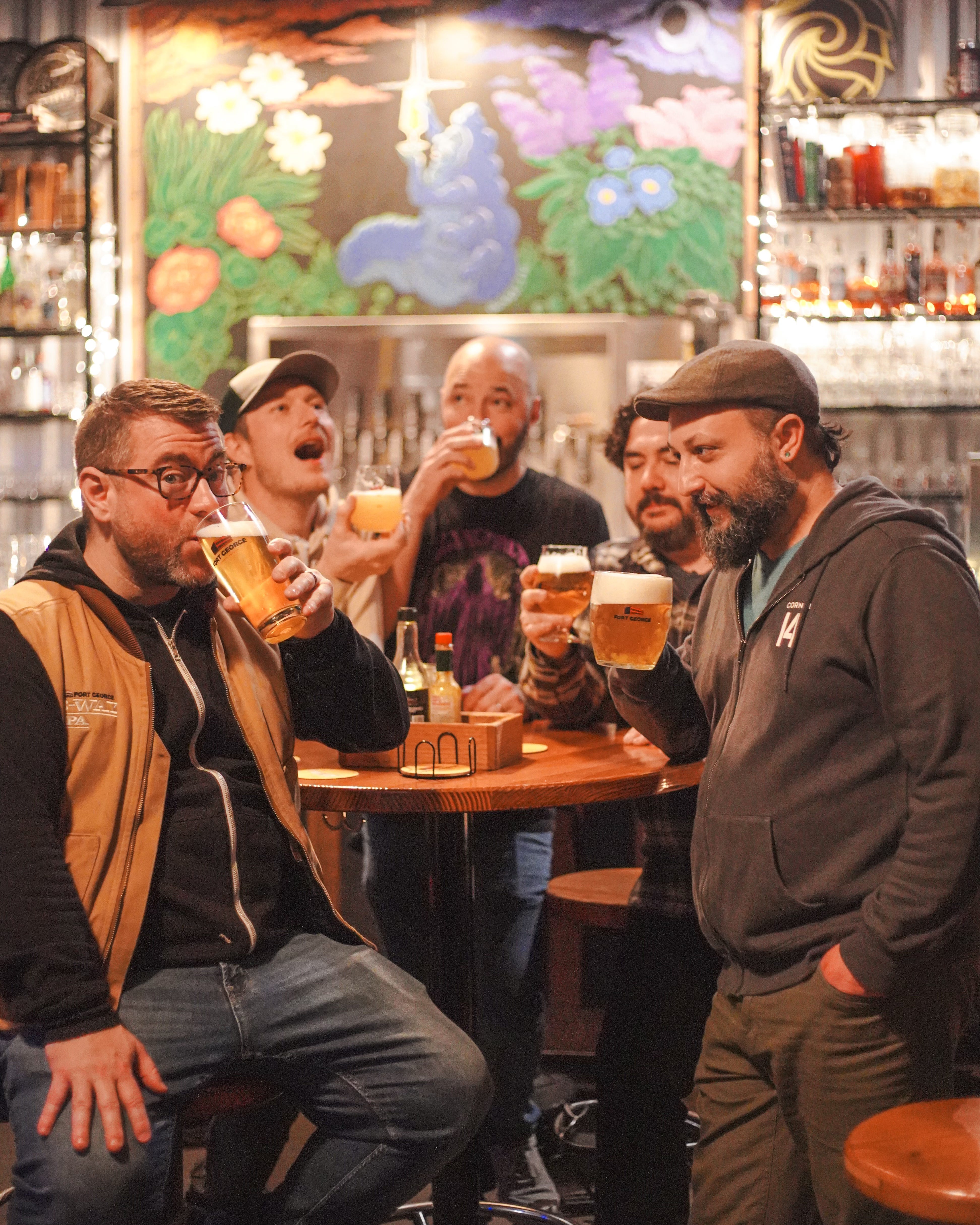
The craft community is collaborative and Fort George works with other breweries constantly. From one-off small batch beers to barrel collaborations to large scale seasonals like Pizza Pals and 3-Way IPA, we’re always on the lookout for other breweries we can learn from.
MICHAL: Vibes. Vibes are like 50% of it. It’s a weird way to say it, but a good collaboration takes a lot of participation from everybody. It’s not enough to just make great beer, we have to know if we’re gonna click. We have to know if we’re all going to be able to get along and discuss the beer, as well as hang out. Just be comfortable stating what we want to each other.
From hop lots to grain bills to water pH, we all do things differently based on where we are, what we’re working with and what are tastes are.
MICHAL: Water profile is interesting. Everybody has such unique water composition, and different opinions of what they think their beers should be. It’s just a constant evolution. We trade information about our water and how we process it. There’s a lot of study and focus on it recently. Like how different pHs influence the ingredients when they come into contact. From grain to hops to yeast. You could have a hop going at 3 wildly different pHs and you’re gonna have wildly different flavors coming from that hop. Also, the ability to search out and get unique lots is something that we’ve passed on to others. People should know that it’s not unusual, cold calling a brewery and asking what lot they have. It’s pretty awesome, nine times out of ten they’ll give it to you happily. And then you’ve got the “secret ingredient” of a brewery. It’s not really that secret. The whole brewing community is pretty wide open.
Regularly sitting down with brewers who do things differently than us has changed the way we brew and the shape of the whole beer landscape. The process of brewing a Beta batch, what we learn and change along the way, is as important as the end product.
Over the next few weeks, you can find Beta batches 37.3, 37.4 and 37.5 at the Pub and occasionally on tap elsewhere. It’s a great way to get a taste of the future of beer.
Can’t wait for Lupulin Ecstasy this year! When do tickets go on sale?